

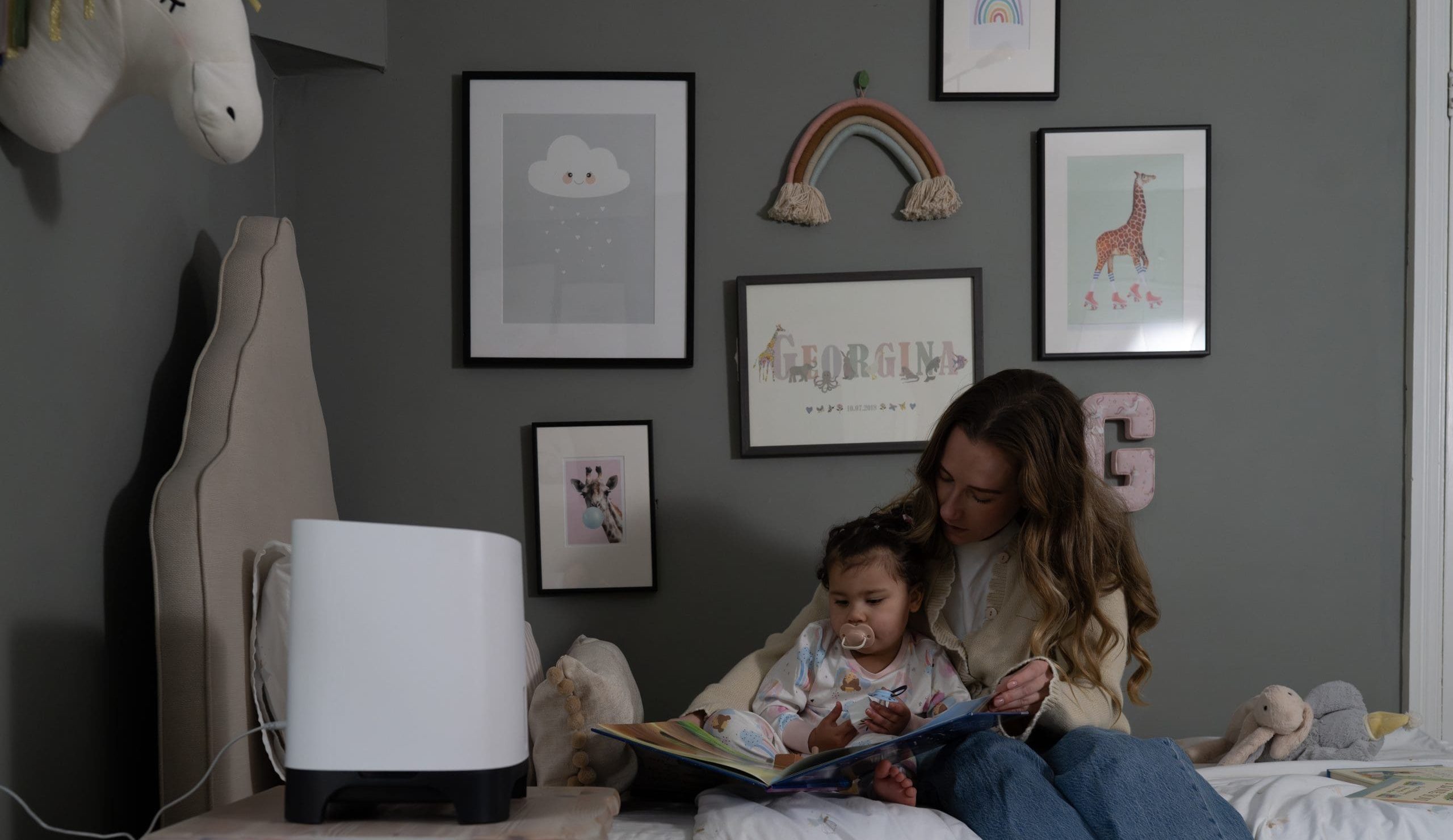
Maintaining a stable relative humidity (%RH) in your home is essential for both comfort and health. Get it right, and you’ll breathe more easily, sleep better, and protect your home. Get it wrong, and you may face a whole host of problems for your home and your health.
Too much humidity can lead to condensation, damp and mould. Long term, this can lead to respiratory issues for yourself and your family as well as damage to your property.
Meanwhile too little humidity can cause dry skin, sore throats, irritated eyes, sleep issues, and even static shocks.
So how do you strike the right balance?
What is the ideal relative humidity?
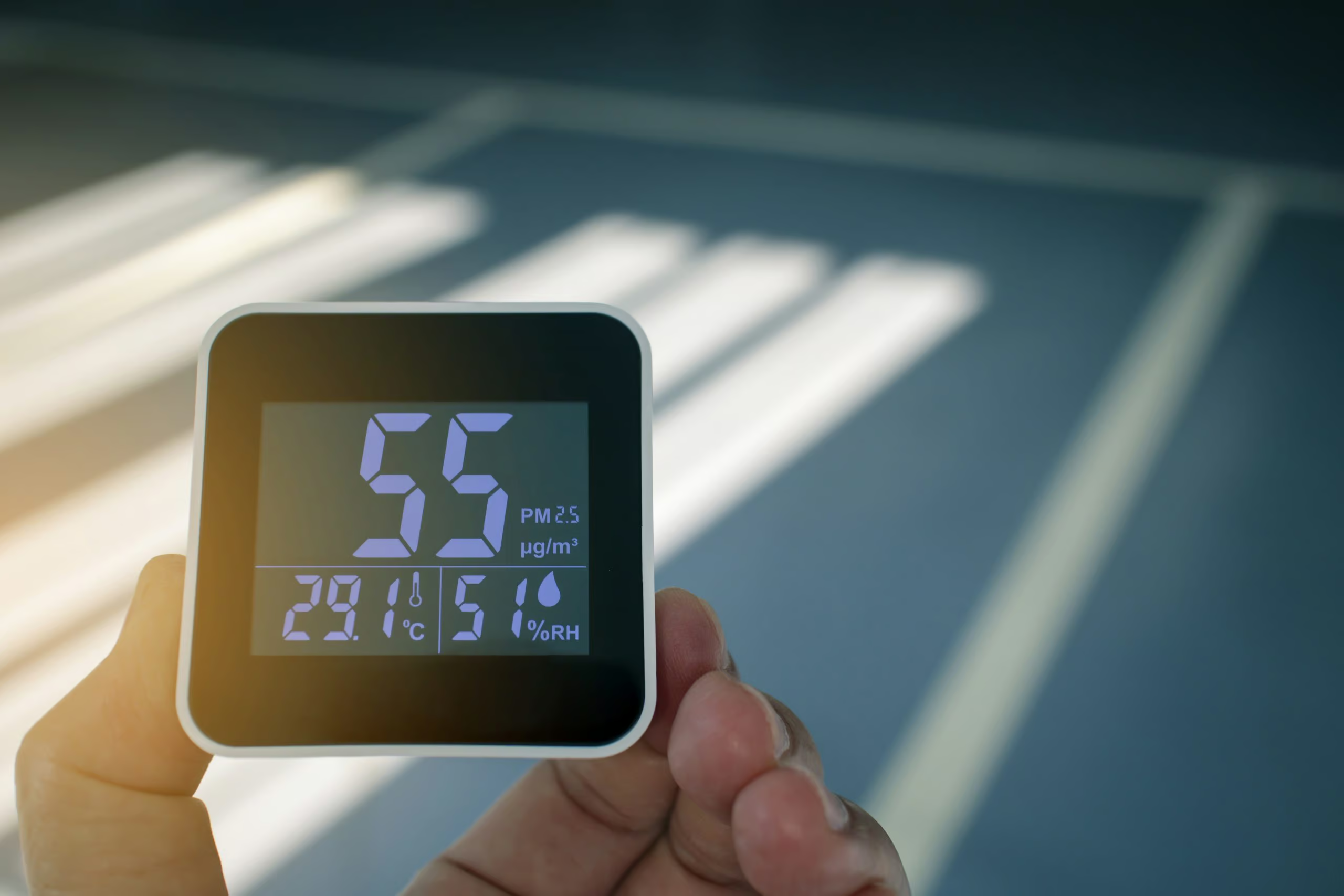
Museums are experts in preserving delicate materials, and they typically aim for 55% RH (±5%). Meaco knows this first-hand: founded in 1991, the company spent nearly 15 years specialising in environmental monitoring equipment for museums and art galleries. If this level of care is good enough for a museum, then it is good enough for our homes.
Once humidity drops below 30% RH, most people start to feel the effects. This is when lip balm becomes a constant companion, skin feels tight and dry, sore throats appear, colds feel worse at night and snoring can become more pronounced.
In many parts of Central and Northern Europe, low humidity is simply a fact of life during winter. Cold outdoor air holds very little moisture and once it’s heated indoors, the relative humidity drops even further. This is because warmer air can hold more moisture, so unless extra water vapour is added, increasing the temperature causes relative humidity to fall. Anyone living at high altitude (such as in the Alps), in sub-zero climates (such as the Nordics), or where winter winds come from the east (and therefore does not pick up much moisture by travelling over seas) will know that a humidifier isn’t a luxury – it’s a necessity.
Isn’t adding moisture simple?
In theory, yes. We add water to the air every day just by cooking or boiling the kettle. But in practice, relative humidity is surprisingly difficult to control.
Add too much moisture and you can quickly create the very problems you’re trying to avoid. Add too little and nothing really changes. This is why choosing the right type of humidifier matters just as much as having one at all.
Why not just use steam?
At its core, a kettle or a pan of water on the stove can be used as a basic steam humidifier. Steam humidification does have one advantage: the boiled water is sterilised before it’s released into the air.
However, because steam evaporates at 100°C, it is unsuitable for most homes. With children, pets, or elderly family members around, having what is essentially a boiling kettle operating in living spaces simply isn’t safe.
And in hard water areas, boiling water also carries limescale residue. Using a kettle as a source of steam means these mineral particles can be released into the air, often settling as a fine “white mist” on nearby surfaces. Over time, this residue can damage furniture and leave an unsightly mess that’s difficult to clean.
Moreover, it’s incredibly inefficient to rely on a kettle to produce enough steam to humidify an entire house or flat. While it may briefly increase relative humidity in a kitchen, as anyone who’s seen condensation creeping up a window will know, kettles are designed for boiling water for tea, coffee, or the occasional hot water bottle. They are not engineered for efficient or controlled humidification.
For these reasons, steam humidification is best left to controlled industrial settings, not for general home use.

The two main types of electric humidifier
Although they all aim to add moisture to the air, electric humidifiers generally use one of two technologies: ultrasonic or evaporative. Each has its own strengths, and knowing how they differ can help you pick the best option for your space.
Ultrasonic humidifiers: benefits and limitations
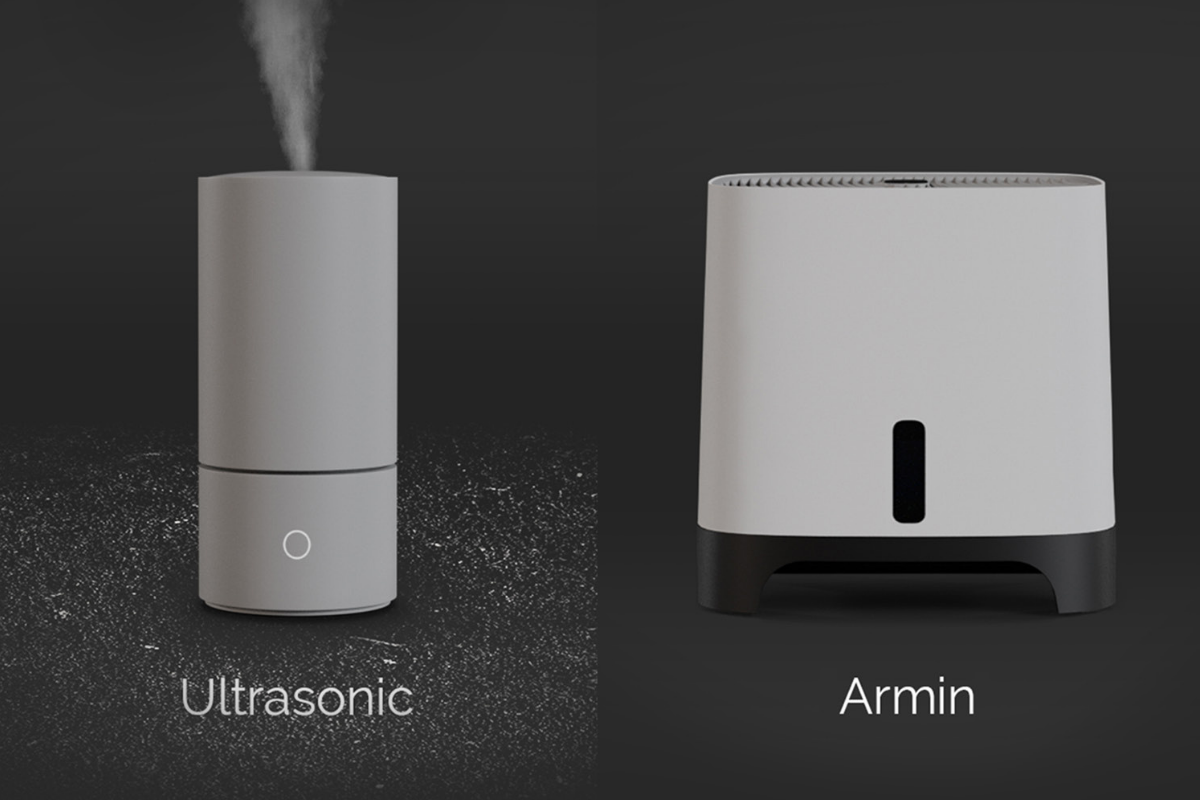
Ultrasonic humidifiers are the most common type on the market. They’re widely available, relatively inexpensive, and easy to recognise by the visible mist or “steam” they produce.
They work by using ultrasonic vibrations to break water into tiny droplets, which are then blown into the room by a small fan.
The advantages:
- You can see and feel the mist or “steam”
- They’re inexpensive to buy
- In soft water areas, maintenance can be minimal
The drawbacks:
- Many models either lack a humidistat or use unreliable ones, making over-humidification a real risk
- Anything in the water – including bacteria and viruses – can be dispersed into the air
- Weak fans often cause moisture to settle nearby, leading to uneven humidity and puddles of water on furniture and surfaces
- In hard water areas, ultrasonic humidifiers quickly clog with limescale, are difficult to clean
- Short lifespan – breakdowns and performance decline mean many users end up replacing units regularly, making them more expensive over time.
These issues explain why museums never use ultrasonic humidifiers.
The museum gold-standard: evaporative humidifiers
So what do museums use?
The answer is evaporative humidifiers – and for a very good reason.
Evaporative humidifiers use simple, natural physics. Air is drawn through a moistened evaporation pad, and only the amount of water the air can safely hold is absorbed. They cannot over-humidify, keeping museum artefacts (and your precious belongings) safe. Nothing more, nothing less.
Why evaporative humidifiers are superior
- They cannot over-humidify a room, even if the humidistat were to fail
- The air is not heated, making them completely safe for children’s bedrooms
- Humidity is distributed evenly throughout the room
- Limescale and dirt are trapped on the evaporation pad, not released into the air
- They will last considerably longer than their ultrasonic counterparts in hard water areas as they are limescale-resistant, even when used with tap water.
Easy maintenance, long term value
Maintenance with an evaporative humidifier is refreshingly straightforward. Limescale and many impurities are captured on the evaporation pad rather than being released into the air and routine care simply involves keeping the water tank clean. When required, replacing the evaporation pads is easy and much cheaper than replacing the whole unit.
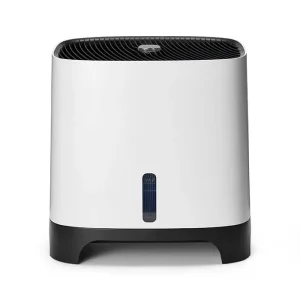
This approach is exactly how the Meaco Armin® range of evaporative humidifiers has been designed to work. The Meaco Armin® uses natural evaporation to add moisture safely to the air, ensuring that only the amount of water the air can hold is released into the room. This means there is no risk of over-humidifying, even if the humidifier is left running for long periods.
Inside each Meaco Armin® is the only European humidifier using Silvertex® water sterilisation pads. Silvertex® prevents the growth of microorganisms and bacteria, supporting cleaner humidification and reducing unwanted odours during use. This adds an extra layer of reassurance for everyday use, particularly in bedrooms, nurseries, and other frequently occupied spaces.
Because the evaporation process traps limescale and impurities on the sterilsation pads, the Armin® humidifiers are particularly well suited to hard water areas, where ultrasonic humidifiers often fail prematurely. Instead of producing white dust or clogging internal components, the Armin® simply requires periodic filter replacement and basic tank cleaning.
Choosing the right size for your home or room
We find many of our customers will opt for a humidifier to run in a bedroom to help with breathing overnight and for a gentle night’s sleep, undisturbed by tickly coughs.
“Based on my previous experience with three humidifiers recommended from different brands, this unit from Meaco is a cut above the rest. Truly a high quality product. An evaporative humidifier is definitely the way to go and great for my kids’ bedroom.” – Meaco Armin® 300 customer, 2025.
The Meaco Armin® 300ml is ideal for smaller rooms such as bedrooms, nurseries, or home offices, providing gentle, consistent humidification throughout the day or night.
The Meaco Armin® 680ml, with its higher output, is better suited to larger rooms or more open-plan spaces where maintaining comfortable humidity levels can be more challenging.
Both models are safe for family homes, as the air is not heated and no visible mist is produced. They operate quietly, distribute humidity evenly, and provide peace of mind for anyone looking to improve indoor air quality without introducing new risks.
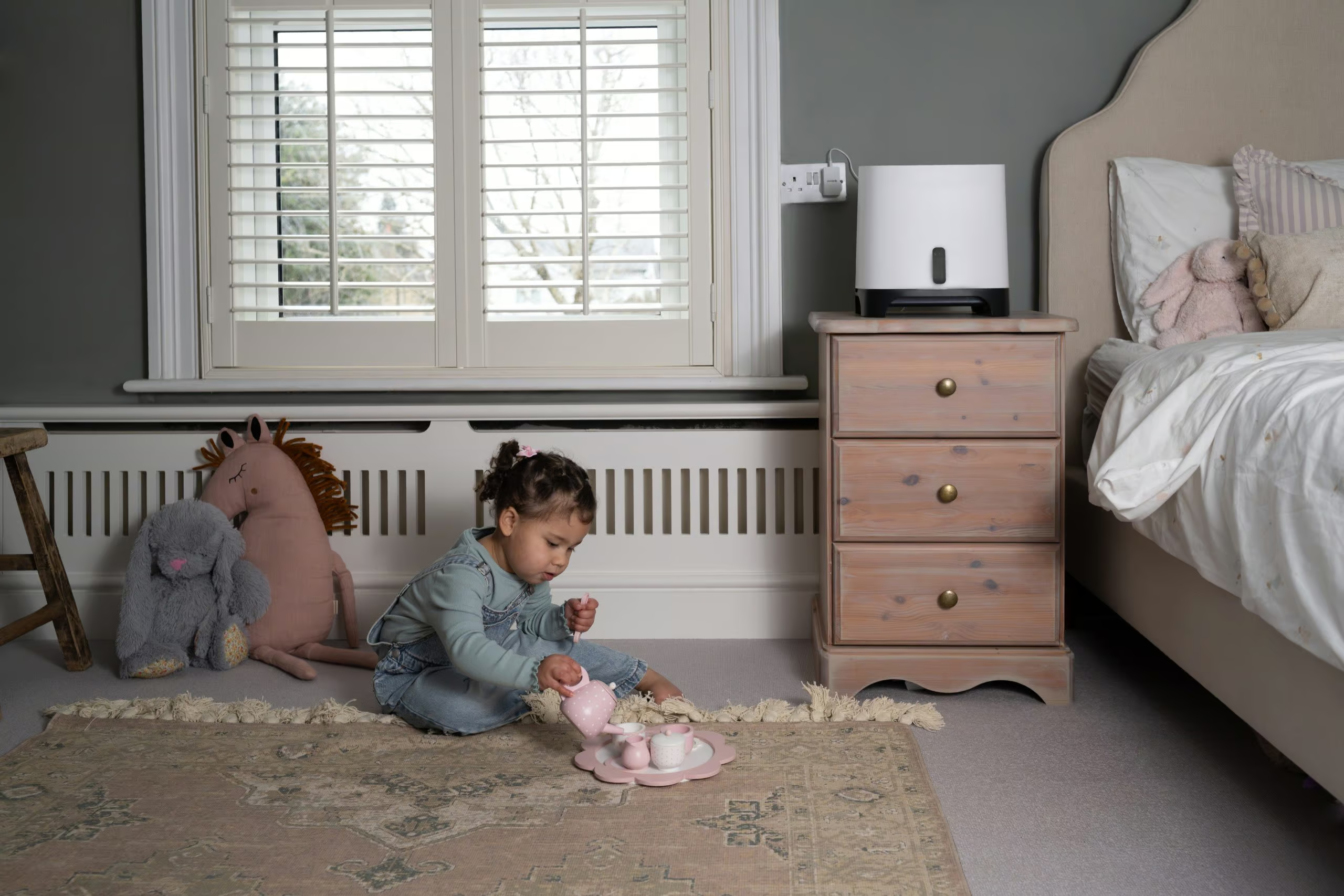
They are safe to use even in babies’ rooms, helping little ones breathe more comfortably through the night and easing dry skin or blocked noses. In bedrooms, they can support deeper, more restful sleep; in living rooms, they help counteract the drying effects of constant heating; and in home offices, they reduce dry eyes and general discomfort during long working hours.
Built for long term comfort
In countries such as Germany and across much of Central and Northern Europe, a humidifier isn’t a seasonal novelty – it’s an essential part of daily life during winter. In the UK, it’s something we often overlook, but there’s probably a thing or two we could learn from this approach. When a humidifier is used regularly for months at a time, durability, safety, and low maintenance become far more important than a low upfront cost.
For this reason, many households choose evaporative humidifiers like the Meaco Armin® 300ml and 680ml. They deliver the same safe, controlled humidification trusted by museums, but in a format designed specifically for the home. With simple maintenance and a long working life, they offer a balanced, dependable solution for healthier indoor air.
Featured:
Meaco Armin® Evaporative Humidifier
- Pure perfectly humidified air: balanced humidity for a comfortable home
- No more dryness: prevents sore throats, dry skin and congestion
- Better baby sleep: eases breathing for peaceful nights
- Allergy relief: helps with asthma and respiratory issues
- Built to last: backed by a 3 year warranty
- Shop now



2 responses
Is it possible to combine the best of both worlds? A dehumidifier and evaporative humidifier in one device. The evaporative humidifier could use the water that has been collected by the dehumidifier when humidity is too low.
Mark,
Thanks for your question. Dehumidifiers and humidifiers are designed to do opposite jobs. A dehumidifier removes moisture from the air, while a humidifier adds moisture back into it. Trying to combine both functions into a single unit would be inefficient, complex, and counterproductive, as the appliance would essentially be working against itself depending on conditions.
In addition, the water collected by a dehumidifier is not suitable for reuse in a humidifier. It can contain airborne contaminants, bacteria, and residues from internal components, so it is not considered clean or safe for evaporation back into the air.
In real-world use, the practical approach is to manage humidity within a healthy target range using one appropriate device. In most homes, excess humidity is the primary issue, which is why dehumidifiers are far more commonly needed than humidifiers. If humidity were ever to become too low, a separate, dedicated humidifier designed specifically for that purpose would be the correct solution.
I hope that helps,
Omar@Meaco