


Spring is in the air – and unfortunately, so is pollen. While many look forward to longer days, blooming gardens and warmer weather, springtime also signals the start of allergy season for millions of people across the UK.
According to the Met Office, hay fever affects nearly 10 million people in England alone – that’s almost one in four adults and one in ten children – and the number continues to rise every year. If you or your family are among them, you’re probably all too familiar with the sneezing, itchy eyes and constant tissue-grabbing that comes with it.
With the right approach, you can take back control and ease the symptoms – all from the comfort of your own home.
As one of the UK’s leading air treatment specialists, Chris Michael, Chief Product Officer at Meaco, shares five practical ways to help reduce hay fever symptoms at home and improve your indoor air quality.
What is hay fever and what causes it?
Hay fever – also known as seasonal allergic rhinitis – is a reaction triggered by pollen from grasses, trees, and weeds. When these microscopic particles enter the body, the immune system sees them as a threat and releases histamines in response. This causes a variety of symptoms that can range from mild to seriously disruptive – especially when dealing with indoor allergies caused by dust, pollen, or mould trapped inside your home.
Common hay fever symptoms include:
- Sneezing and coughing
- Itchy, red, or watery eyes
- A scratchy throat, itchy nose, mouth, or ears
- Headaches, earaches, and fatigue
- Worsening asthma symptoms such as wheezing and chest tightness
Grass pollen (active between May and July) is the most common culprit, but tree pollen (between Feb and June) and weed pollen (June to Sept) can also trigger symptoms.
There’s currently no cure for hay fever, but there are plenty of ways to manage the condition — especially if you start early and make some smart lifestyle changes.
1. Start medication early
Timing is everything. See your GP before hay fever season peaks (late March to September). Starting antihistamines, nasal sprays, or other treatments early can help prevent your immune system from overreacting to pollen.
Check out the NHS website for up-to-date recommendations on over-the-counter and prescription hay fever treatments.
2. Monitor the pollen forecast
Stay one step ahead by checking the Met Office pollen forecast, available up to five days in advance. Monitoring daily pollen levels helps you plan outdoor activities, take medication proactively, and stay indoors when counts are high.
Top tip: Download the Met Office app or enable alerts for real-time updates.

3. Deep clean your home
Spring clean your house early. Dust and dust mites increase the onset of hay fever and similar allergies, so reducing and regularly removing dust from your house in advance of the allergy season will ease the causes of allergies at home.
Tips to allergy-proof your home:
- Vacuum carpets, rugs, and upholstery regularly using a HEPA-filter vacuum
- Wash bedding in hot water weekly
- Use anti-allergy covers on mattresses and pillows
- Keep windows closed during high pollen times (early morning and evening)

4. Be smart about laundry and clothing
When you get home after being outside, don’t let the pollen come in with you. Change out of your clothes straight away, as pollen loves to cling to fabrics and can easily transfer to your sofa, carpets, and bed. Even better, hop in the shower before bed to wash away any lingering pollen from your skin and hair – your sinuses (and your sheets) will thank you.
And as lovely as a fresh breeze-dried duvet sounds, hold off on drying clothes outdoors during high pollen days. All that airborne pollen will stick to your laundry like Velcro, only to sneak back inside and undo all your hard work.
5. Invest in a high performance air purifier
If you’re serious about tackling hay fever at home, an air purifier with a H13 medical-grade HEPA filter is one of the best tools you can add to your hay fever relief toolkit. At Meaco, we have an incredible range of 2-in-1 solutions: combined Air Purifier/ Dehumidifiers. Perfect for everyone.
Looking for a HEPA specific 2-in-1 solution? Look out for Meaco Low Energy and MeacoDry Arete® models.
These devices work by pulling air through a series of filters, trapping pollen, dust, pet dander, and other airborne allergens before they can irritate your respiratory system. While doing this, the 2-in-1 units will also dehumidify which means it extracts excess moisture from the air, reducing damp, mould and condensation. In turn, this is actually proactive as damp conditions can be a breeding ground for additional germs and bacteria.
Pop one in your bedroom, and you might finally enjoy a sneeze-free night’s sleep.
But not all air purifiers are created equal. According to Meaco’s research, many people buy a unit that’s too small for their room, meaning it doesn’t clean the air effectively.
So how often should your air be cleaned?
- 3x per hour for mild allergies
- 5x per hour if you’re taking prescribed allergy medication
- 8x per hour for severe symptoms
A general rule of thumb, is that often the larger models will offer a high performance for your room – both for air changes per hour and for dehumidification extraction rates. Contact our team in Customer Service if you have any specific questions around allergies and our combined dehumidifier/ air purifier models.
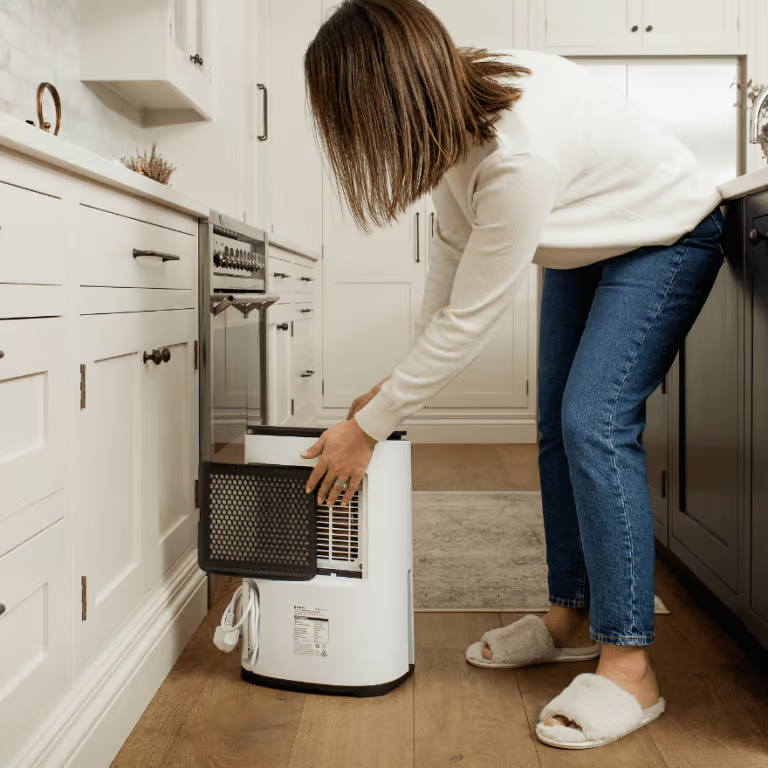
MeacoDry Arete® Combined Dehumidifier/ Air Purifier with medical-grade H13 HEPA filter
Standout features include:
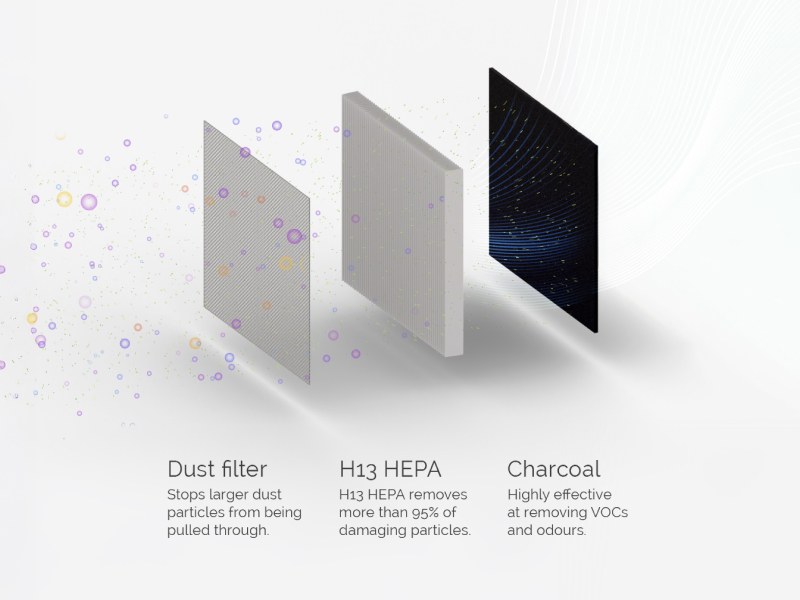
- Multi-stage filtration system including dust filter to extract larger particles such as dust, dust mites and pet dander, HEPA filter to extract 99.95% of microbes as small as 0.3mg, activated charcoal to extract VOCs and bad smells
- Some air purifiers and dehumidifiers also have UV with PCO and ionisers to further eliminate allergens, odours, and bacteria
- Feather-touch controls and a filter replacement alert for hassle-free use
- Energy efficient and whisper-quiet, ideal for overnight use in bedrooms
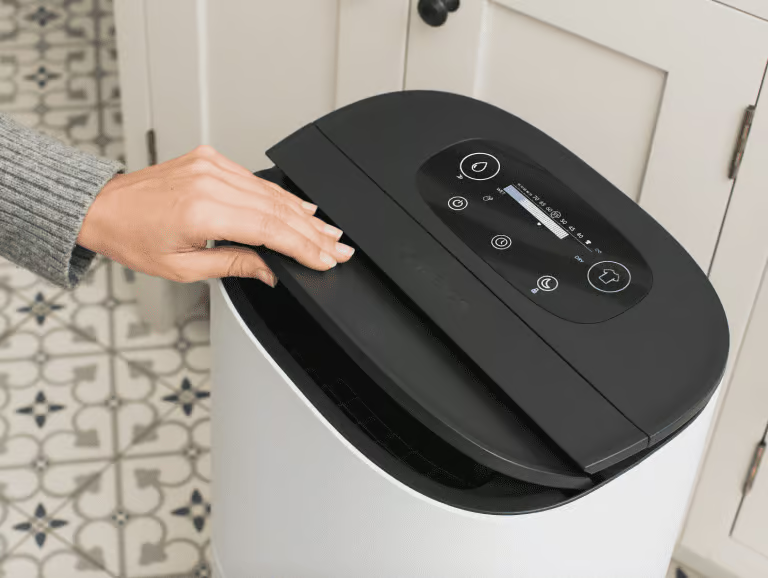
MeacoDry Arete® Two
Need coverage for larger spaces or looking for smart features? The MeacoDry Arete® Two Combined Air Purifier/ Dehumidifier is our most advanced model yet!
Why you’ll love it:
- Wi-Fi connectivity: control via a smartphone app
- Optional H13 HEPA filter: for 99.97% particle removal – ideal for severe allergies or post-COVID air safety
- Optional Charcoal filter to further remove VOCs (volatile organic compounds) such as cigarette smoke and traffic pollution as well as bad smells
- Night mode, air quality light, child lock, laundry mode and 24-hour timer for smart, user-friendly operation
- And, because it is a dehumidifier as well, you will be proactively managing your indoor air quality by removing excess moisture and limiting damp, mould and condensation
Whether you want a compact unit for a small room or a smart solution for your whole home, Meaco’s air purifiers and dehumidifiers are designed with British households and allergy sufferers in mind.
Bonus tip: Choose allergy friendly plants for your home
Bringing nature indoors can boost mood, improve air quality, and add a calming touch to your space – but if you suffer from hay fever, you’ll want to be selective about which plants you welcome into your home.
Some houseplants can actually worsen allergy symptoms by releasing pollen or harbouring mould in their soil. But don’t worry – there are plenty of beautiful, low-allergen options that are safer for sensitive sinuses.

Allergy-friendly indoor plants to consider:
- Spider plant – Low-maintenance and great at removing airborne toxins
- Peace lily – Helps filter the air and produces very little pollen
- Areca palm – Adds a tropical feel and acts as a natural humidifier
- Snake plant (Sansevieria) – Excellent air purifier and virtually pollen-free
- Bamboo palm – A stylish plant that removes airborne allergens
Plants to avoid if you’re allergy-prone:
- Ficus (Weeping fig) – Common allergen and can irritate sensitive skin
- Fern varieties – Can release spores and trigger symptoms
- Flowering plants like lilies or chrysanthemums – Often high in pollen
Also, keep an eye on soil moisture — overly damp soil can lead to mould growth, which is a common trigger for allergy sufferers. Use a potting mix with good drainage, and avoid overwatering.
Choosing the right plants allows you to enjoy the benefits of greenery without aggravating your hay fever — proving you can still enjoy nature, even during allergy season.
Enjoy spring again
Hay fever can turn a beautiful time of year into a real struggle. But with a few proactive steps – from early treatment and daily pollen checks, to home cleaning and air purification – you can take control of your environment and dramatically reduce your symptoms.
Start with the basics, build good habits, and consider investing in technology that works quietly in the background to protect your air and wellbeing.
Breathe easier. Sleep better. Enjoy spring again.

Products featured:
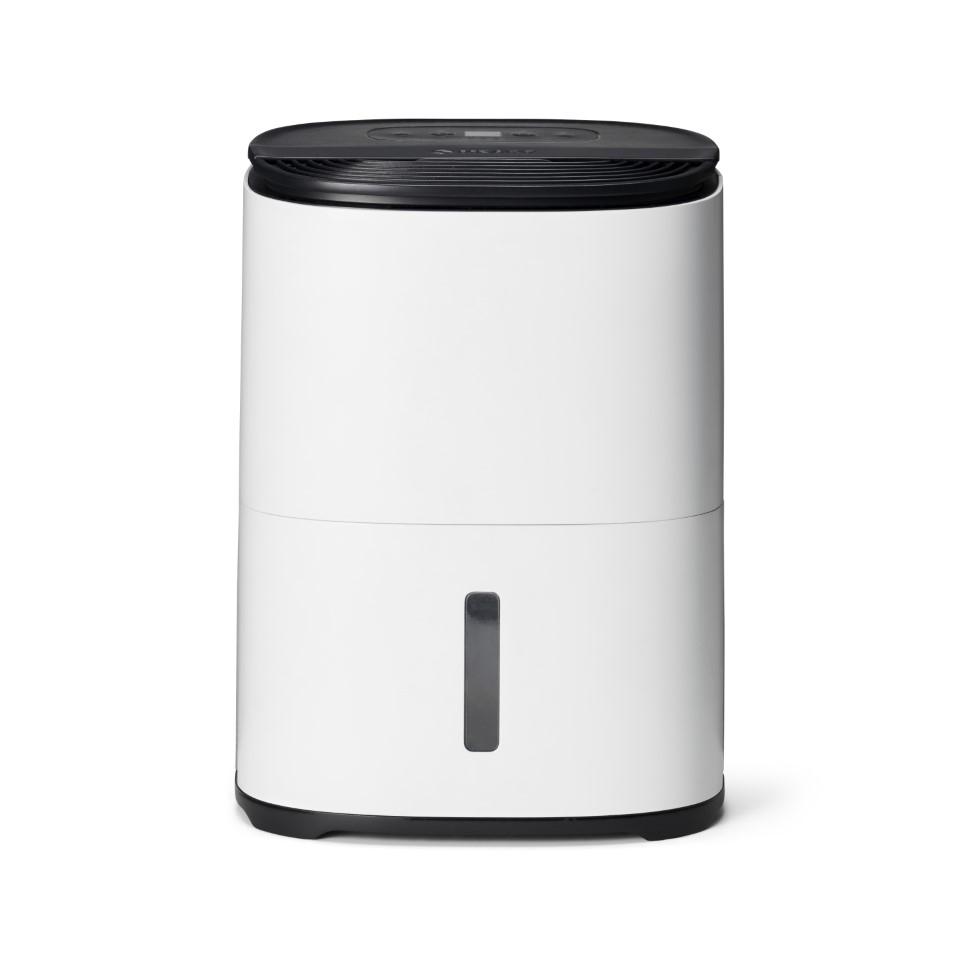
MeacoDry Arete® One Dehumidifier/ Air Purifier
- Includes medical-grade H13 HEPA filter
- Easy-to-use one touch buttons
- Available in: 6, 10, 12, 20 and 25L
- Built to last: Free 5-year warranty
- Shop now
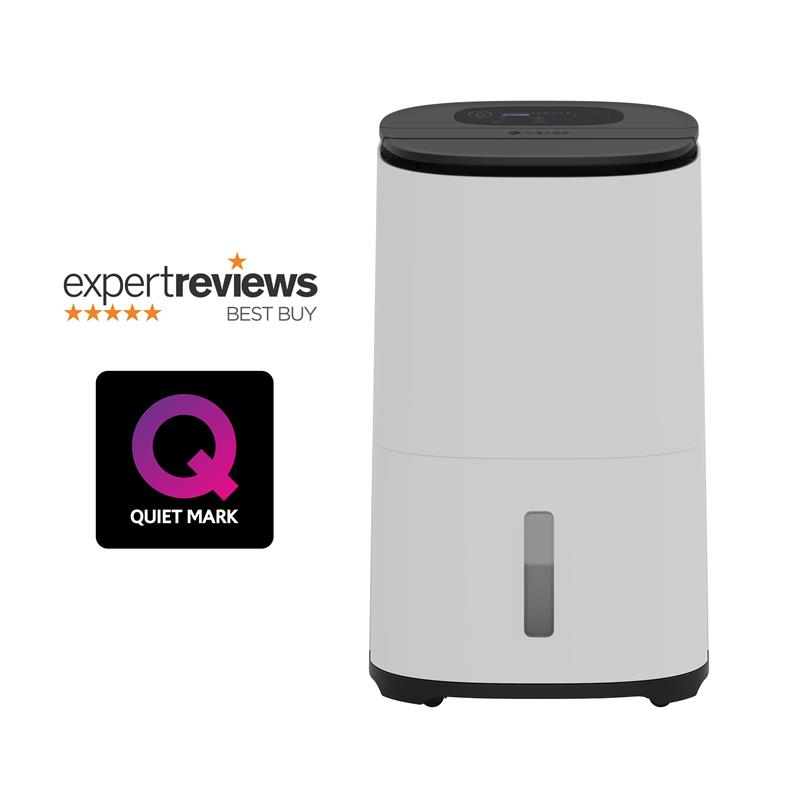
MeacoDry Arete® Two Dehumidifer/ Air Purifer
- Includes medical-grade H13 HEPA filter
- Available in: 10, 12, 20 and 25L
- LCD ‘Chase’ Display and App enabled
- Adjustable louvre and additional fan speed for air circulation
- Built to last: Free 5-year warranty
- Shop now

- Includes medical-grade H13 HEPA filter
- Available in: 12 and20L
- Unique Meaco control logic saves money and improves performance
- Free 2-year warranty
- Shop now






4 responses
Meaco i have 2 dehumidifier’s also 2 of the new style air purifiers/ dehumidifiers I would not be without them , I would highly recommend them fantastic.
Ann,
Thank you for your feedback, we’re really glad to hear they’ve been working well for you.
Kind regards,
Omar@Meaco
Does air purifier dismiss vapes from neighbours flat into mine.
What’s the cost of replacement hepa filters
Mrs J,
Thank you for your enquiry. If your windows are open, using an air purifier at the same time won’t be effective and would defeat the purpose. we’d always advise you keep your windows closed when using an air purifier.
Inside the air purifier, you’ll find a HEPA filter, which is designed to capture fine particles like mould spores, pollen, dust, pet dander, and even some bacteria and viruses, ours meet the true HEPA standard. The charcoal filter mainly targets odours, helping to reduce smells with each pass of air through the unit.
Replacement filter costs vary by model, if you click the link below, you can see our latest options.
Air Purifier Spares
I hope this helps.
Omar@Meaco