

Energy bills are back in the headlines this summer, with the latest price cap increase set to rise by 13%.
Given everything we’ve seen in the news and politics, you may not be surprised to learn that UK household energy prices are going up. While nobody welcomes higher household costs, the detail behind this latest change tells a more nuanced story than the headlines suggest.
This time, the biggest pressure isn’t coming from electricity. It’s gas that has seen a larger increase, but this blog is equipped with tips on how to stay comfortable without overspending.
The good news? There are still plenty of ways to stay comfortable, protect your home and health, and keep energy use under control.
What is the new price cap change?
Ofgem updates the UK energy price cap every three months. This cap limits the maximum unit price and standing charge suppliers can charge customers on standard variable tariffs – it is not a cap on your total bill. Your actual costs still depend on how much energy you use and where you live.
For the current review period, Ofgem announced a 13% increase in the typical annual household bill equivalent for customers on default tariffs.
Average capped unit rates are now:
- Electricity: 26.11p per kWh (+ around 5% increase compared to the previous tariff, from 24.6p/ kWh)
- Gas: 7.33p per kWh (+ around 28% increase, from 5.4p/ kWh)
Why energy efficiency still matters (even if electricity isn’t rising as much)
At first glance, summer might seem like an odd time to worry about rising energy costs. And it’s a very strange time to be discussing heating options! Most households are not running central heating in July or August. If anything, the biggest question is whether to fill up the padding pool with a hose pipe ban on the horizon.
If your household can become slightly more efficient now, those changes become much more valuable when the heating season begins. Think of the next few months as a chance to build good habits before higher gas usage returns in autumn.
While the focus is mainly on gas costs, it still makes sense to consider more conscious use of electricity.
There is still a common assumption that using a fan is expensive to run, when in fact a low-wattage fan typically uses only a fraction of the energy required by larger cooling appliances.It is one of the most efficient and sustainable ways to stay cool. Take a look at our MeacoFan Sefte® range for more air, less noise and less energy!
Equally, if you’re considering an Air Conditioner, our Cirro®+ Super-Quiet Inverter Range will keep you cool for less. While the cost-to-run difference is only around 1p per kWh, it is the “cruise control” effect of inverter technology that makes the real difference, using only the energy needed rather than running at full power all the time.
At Meaco, we’re committed to transparency around energy costs and update our website with every energy price cap change so you always have the latest information.
Choosing efficient appliances therefore isn’t about reducing comfort. It is about ensuring that comfort, health, and cost control can coexist without compromise.
Read more: Rising bills put efficiency in focus for year round air treatment.

Our top tips
How to stay comfortable without overspending and which energy-hungry habits you can check around your house – and we don’t just mean the teenagers!
The bigger concern for many households may not be summer cooling but what happens once temperatures begin to fall. That makes now a surprisingly good moment to do a few small checks.
1. Check for fixed tariffs or new providers
The price cap only affects households on standard variable tariffs.
Some customers may have locked in their fixed price cap in readiness but for many energy providers, there may still be time. Fixed deals are the best way to lock in the price you currently pay (usually for one year) meaning you won’t be directly affected by cap changes until the end of your fixed price term.
Ofgem recommends checking whether your supplier offers fixed options and comparing carefully before making decisions. That doesn’t mean a fixed tariff is automatically cheaper, but now could be a sensible time to compare options.
Things worth checking:
- Can you lock in a fixed term price with your current provider?
- What are the new provider’s unit rates and standing charges
- Are there additional set up fees for moving, for example, they require a new smart meter?
- Are there any exit fees if you choose a new provider?
- Have you completed your required contract length
The cheapest headline tariff is not always the cheapest for your household so it’s worth reading the small print.
2. Check your heating schedule now (yes, even in summer)
This catches more people out than you might expect. Many households set their thermostat to a target of 18–20°C year-round, so in summer, when temperatures are regularly reaching 24°C or more, it’s unlikely that central heating will be coming on. However, some homes have bathroom towel radiators on a separate system, or use timed schedules rather than temperature-based controls.
As a result, many households discover that radiators are still programmed to warm up for an hour or two in the morning, even though nobody notices. It may not be obvious that the heating is running, especially if it’s only briefly before everyone wakes up and windows are already open.
Those small periods of unnecessary heating can quietly add up and for gas boilers in particular, this could become quite expensive with the new tariffs.
3. Choose energy efficient products where possible
When buying new appliances, efficiency remains one of the most important factors to consider, even if it is not always the most obvious at the point of purchase. In many cases, paying slightly more for a higher quality, more efficient unit can lead to significant savings over time.
This is where doing a bit of research really matters, as efficiency is not just about wattage, but also about how intelligently an appliance manages its energy use in real-world conditions. For example, inverter technology, as used in air conditioning systems such as Meaco’s Cirro®+ range, allows the unit to adjust its output dynamically rather than simply switching on and off at full power. This “cruise control” style operation helps maintain a stable temperature more efficiently, avoiding unnecessary spikes in energy use. Compared to traditional Air Con units, you’ll be surprised with this one!
Similarly, features that give you greater control over performance can make a meaningful difference. Dehumidifiers such as the Meaco DD8L Pro have been engineered by our team to have a Smart Energy Mode, giving you complete control. This flexibility means you can balance comfort, efficiency, and cost depending on the conditions in your home. Meaning you can dry the washing inside, even when it’s raining (despite the sunny forecast)!
Read more: Save £700 with Meaco
4. Use appliances intentionally
Energy efficiency is often thought of in terms of the appliances we buy, but in reality, day-to-day behaviour plays an equally important role in how much energy a home uses.
In many cases, energy is not wasted through one major action, but through small habits that build up over time without much notice. A fan left running in an empty room, appliances left on standby, or devices used for longer than necessary all add to energy consumption without necessarily improving comfort.
5. If you have a smart meter, pay attention to the patterns
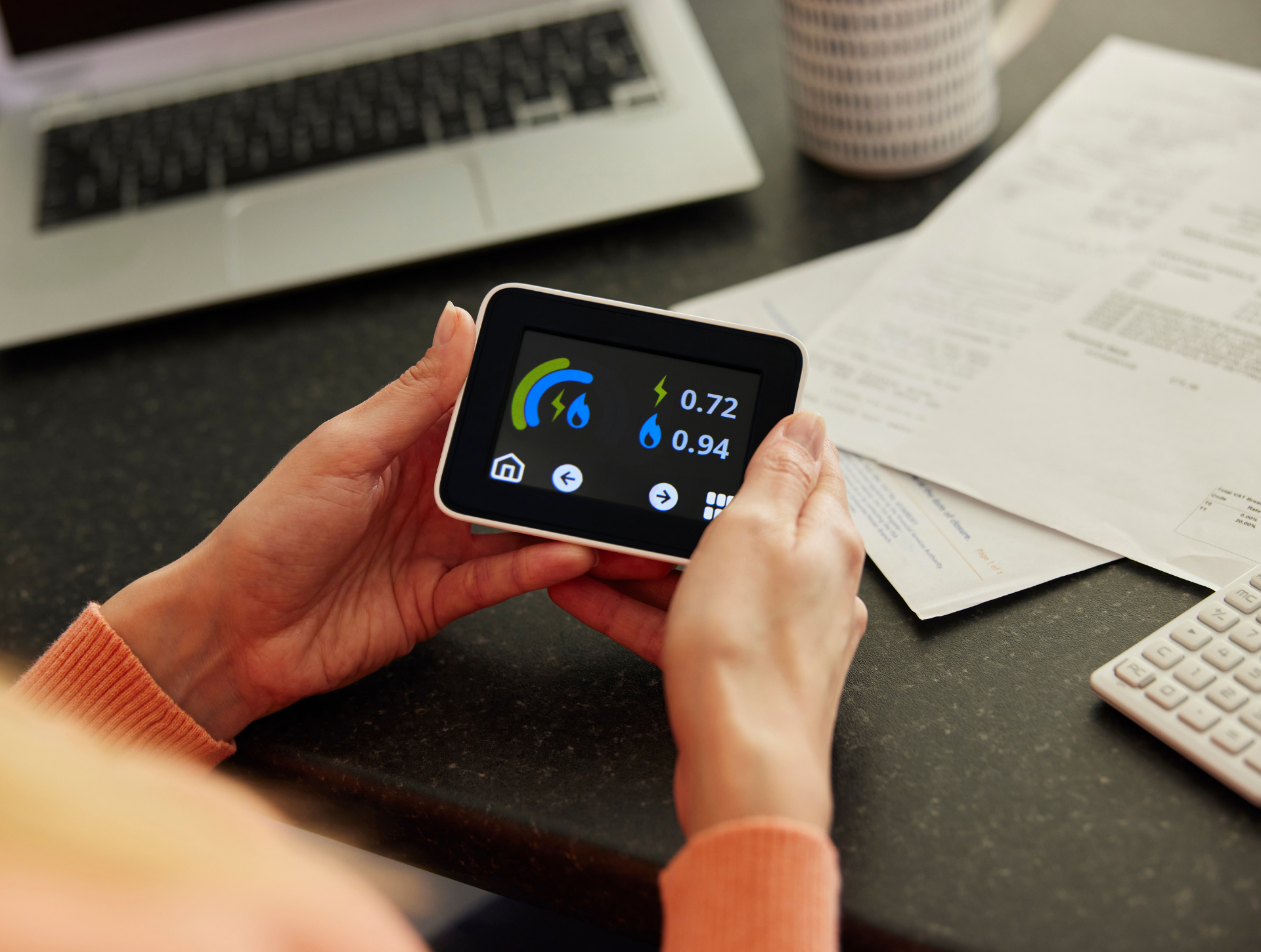
Smart meters won’t reduce your bills on their own, but they can be useful in helping you understand how energy is being used in your home.
Summer is an especially good time to take a closer look, because overall usage tends to be lower and patterns are easier to identify. It can help to observe things like your overnight baseline usage, short spikes during cooking, appliances that are quietly drawing power in the background, and any regular heating or hot water schedules that may not be optimised for current needs.
That way, when autumn arrives and heating demand increases, you already have a clearer sense of your baseline, making it easier to spot changes and manage usage more confidently.
6. Keep cool with out-of-the-box thinking
There are many ways to get creative when it comes to staying cool while using less energy this summer.
For example, closing your curtains during the day can help keep sunlight out and reduce the greenhouse effect—especially in south-facing rooms.
Some customers have even reached out to say they put linen in the fridge or freezer before bed to enjoy some cool sheets when they get into bed; a dream combination having precooled your room with a Meaco Air Conditioner!
Why not get in touch with your top tips for staying cool?
Read more: Easy tips for keeping cool in the heatwave
7. Why does British Gas actually recommend using your dehumidifier for relief in the heat!
In advice for households looking to stay cool, British Gas Smart Energy Engineer Jessica Rawstron explained that reducing humidity can make hot conditions feel more manageable because it “pulls the moisture out of the air and lets your skin breathe better.”
While a dehumidifier doesn’t lower the room temperature in the same way as air conditioning , removing excess moisture can make rooms feel fresher and less heavy, particularly on humid summer days and overnight when comfort and sleep can be affected.
Read more: British Gas advice on staying comfortable during hot weather.
Stay cool, efficient and energy conscious
Rising energy prices will not be welcome news for many households, and it is understandable that this can feel frustrating in the context of ongoing cost pressures.
However, there is some useful context to bear in mind. This latest increase is being driven more heavily by gas than electricity, and because gas demand is typically much lower during the summer months, many households may not feel the full impact straight away.
That timing does create a small window of opportunity. The quieter summer period can be used to take stock of current energy arrangements, review heating schedules, consider whether tariffs still suit your household, and make small but meaningful adjustments to how appliances are used day to day. It is also a good moment to think ahead to the colder months, when energy demand naturally increases.
Individually, none of these changes are dramatic. But together they can help build more efficient habits that carry through summer and into autumn, when they are likely to matter most.
Featured Products
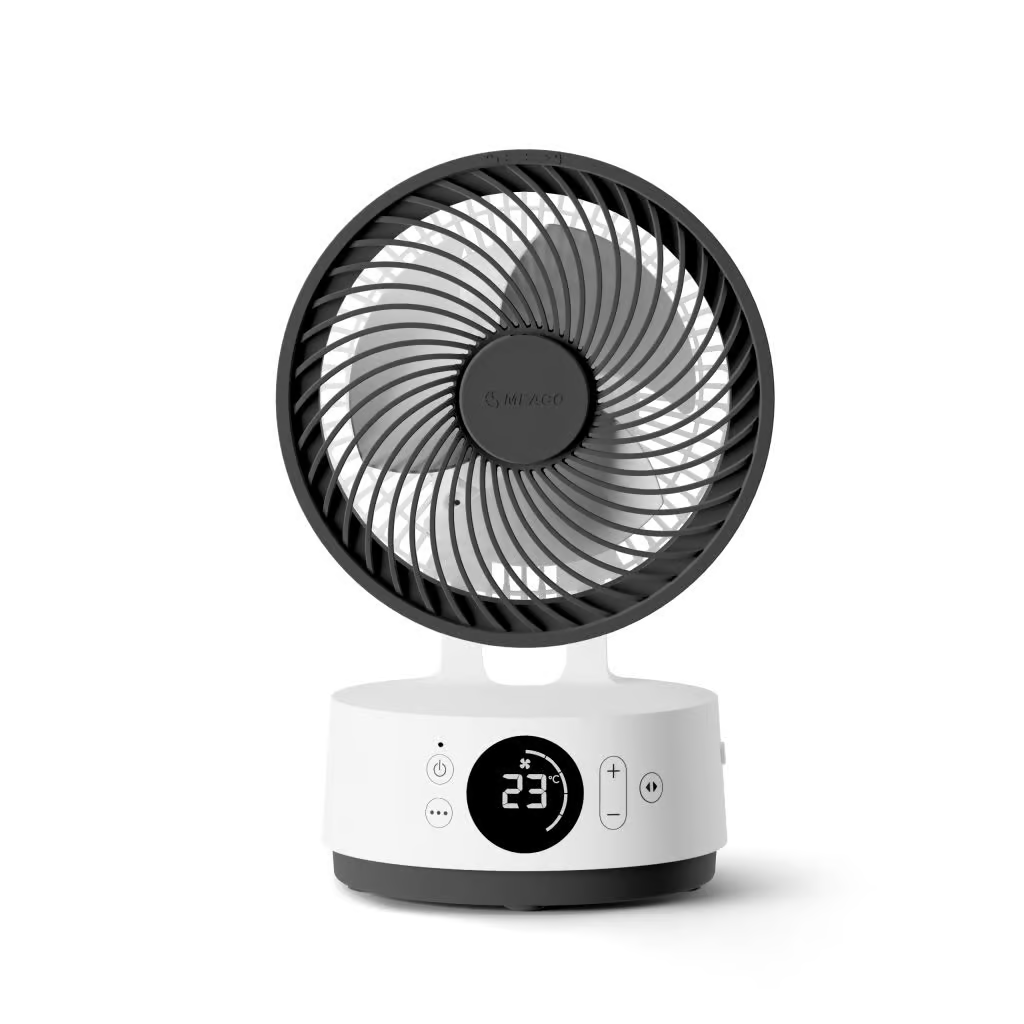
MeacoFan Sefte® Air Circulator Range
- 3-in-1 Air Circulator (Pedestals)
- Air Beam Precision
- Whisper quiet – from 25 dB
- Energy efficient 1p/ kWh to run
- Shop Sefte® online
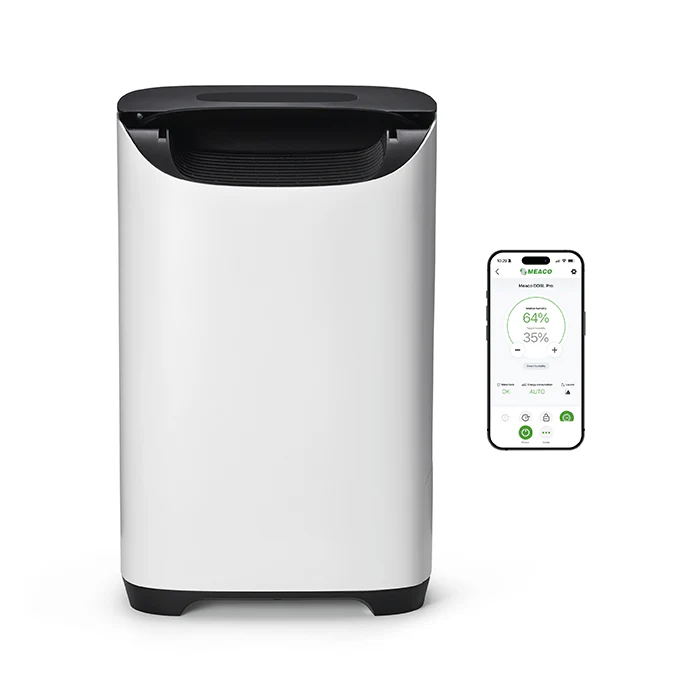
- Smart Energy Mode: Control your energy use
- Smart App: Effortlessly in control
- Powerful extraction, even below 10°C
- Shop now
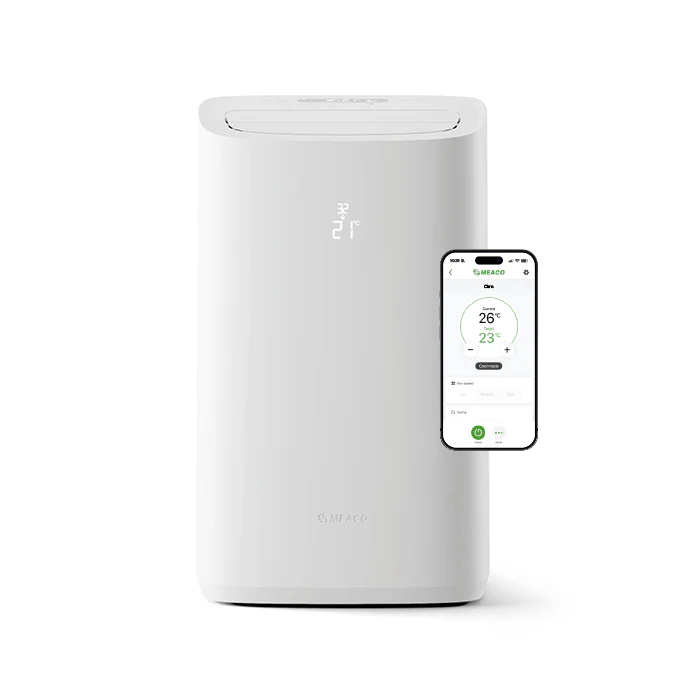
MeacoCool Cirro® + Super-Quiet Inverter Portable Air Conditioner Range
- More than twice as quiet, without compromising on performance.
- Inverter, integrated energy-saving technology
- Up to 4-in-1 functionality features cooling, drying, heating & 3 different fan settings
- 2-year warranty
- Shop now
Summer 2026: Our MeacoCool Cirro® range has proven extremely popular and are currently out of stock. Please check retailers such as John Lewis and Currys for current availability of MeacoCool Portable Air Conditioners.






One Response
Some years ago I purchased my first Meaco fan, it was and remains brilliant. Since then I have purchased two more Meaco fans and they are outstanding in their performance. Added to this, not only are the products fantastic but the customer service been exemplary. I have had two remote controllers break and both were no problem to replace. One fan packed up altogether and was immediately replaced. On the Meaco website there is sensible advice to keep cool and not just marketing for their products. Quite honestly, I wish Meaco would sort out the rest of my life – they just make it easy…